


Can an OBD Splitter Adapter be used in a commercial vehicle?
In the realm of automotive technology, the On - Board Diagnostic (OBD) system has become an integral part of vehicle management. OBD systems were initially designed to monitor and report on the vehicle's performance and emissions. With the advancement of technology, OBD splitter adapters have emerged as a useful tool. As a supplier of OBD Splitter Adapters, I am often asked whether these adapters can be used in commercial vehicles. In this blog, we will explore this question in detail.
Understanding OBD Splitter Adapters
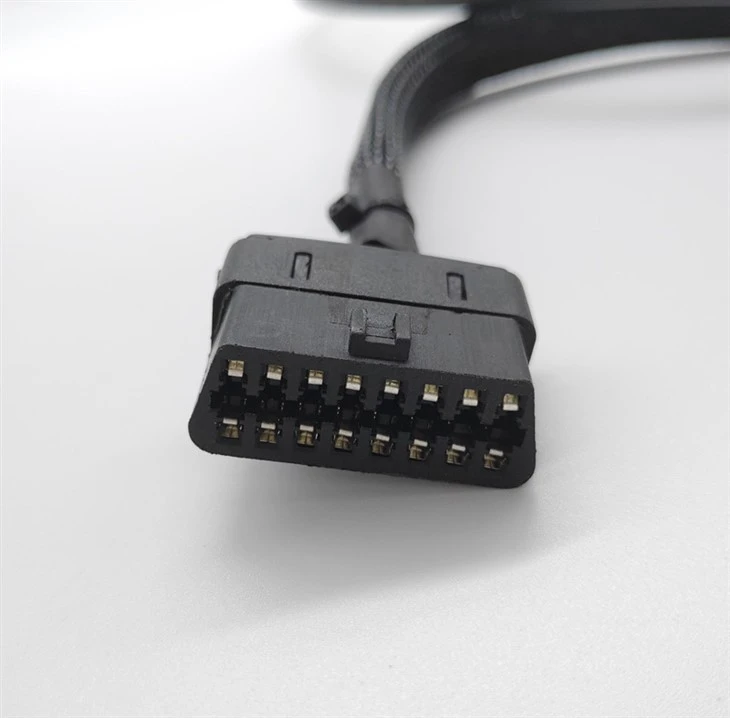
OBD splitter adapters are devices that allow multiple OBD - compatible devices to connect to a vehicle's OBD port simultaneously. This is particularly useful when you need to use more than one diagnostic or monitoring tool at the same time. For example, you might want to connect a diagnostic scanner to check for error codes while also using a data logger to record vehicle performance data.
The OBD Splitter Adapter essentially splits the OBD port into multiple ports, enabling multiple connections. It is a simple yet effective solution for those who require more functionality from their vehicle's OBD system.
Compatibility with Commercial Vehicles
Commercial vehicles, such as trucks, buses, and delivery vans, have different requirements compared to passenger cars. However, in most cases, OBD splitter adapters can be used in commercial vehicles.
OBD Standards
Most modern commercial vehicles are equipped with OBD - II systems, which are standardized across the automotive industry. These systems use a common diagnostic connector and communication protocol, making them compatible with a wide range of OBD - II devices, including OBD splitter adapters.
For example, heavy - duty trucks often follow the J1939 protocol, which is an extension of the OBD - II standard for commercial vehicles. Many OBD splitter adapters are designed to be compatible with this protocol, allowing them to be used in these types of vehicles.
Power and Signal Requirements
Commercial vehicles typically have a more robust electrical system compared to passenger cars. OBD splitter adapters need to be able to handle the power and signal requirements of the vehicle. High - quality OBD2 Splitter Advance Auto Parts are designed to work with the electrical systems of commercial vehicles, ensuring stable power supply and reliable signal transmission.
Diagnostic and Monitoring Needs
Commercial vehicle operators often have more complex diagnostic and monitoring needs. For instance, they may need to monitor engine performance, fuel consumption, and emissions in real - time. An OBD splitter adapter allows them to connect multiple devices, such as a fleet management system and an emissions monitoring device, to the OBD port simultaneously. This enables comprehensive vehicle management and helps in maintaining compliance with environmental and safety regulations.
Benefits of Using OBD Splitter Adapters in Commercial Vehicles
There are several benefits to using OBD splitter adapters in commercial vehicles:
Cost - Efficiency
Instead of purchasing a single multi - functional device, which can be expensive, operators can use an OBD splitter adapter to connect multiple existing devices. This reduces the overall cost of vehicle monitoring and diagnostic equipment.
Flexibility
OBD splitter adapters provide flexibility in terms of the devices that can be connected. Operators can choose different diagnostic and monitoring tools based on their specific needs, and easily swap them out as required.
Improved Vehicle Management
By connecting multiple devices, operators can gather more comprehensive data about the vehicle's performance. This data can be used to optimize fuel consumption, reduce maintenance costs, and improve overall vehicle efficiency.
Potential Challenges
While OBD splitter adapters offer many benefits, there are also some potential challenges when using them in commercial vehicles:
Signal Interference
When multiple devices are connected to the OBD port through a splitter adapter, there is a risk of signal interference. This can lead to inaccurate data readings or device malfunctions. However, high - quality Diagnostic Port Splitter are designed with features to minimize signal interference, such as shielding and proper grounding.
Compatibility Issues
Although most commercial vehicles are OBD - II compatible, there may still be some compatibility issues with certain devices. It is important to ensure that the OBD splitter adapter and the connected devices are compatible with the vehicle's OBD system.
How to Choose the Right OBD Splitter Adapter for Commercial Vehicles
When choosing an OBD splitter adapter for commercial vehicles, the following factors should be considered:
Compatibility
Ensure that the adapter is compatible with the vehicle's OBD system and the devices you plan to connect. Check the specifications of the adapter and the devices to ensure they work together.
Quality
Choose a high - quality adapter that is built to withstand the harsh environment of commercial vehicles. Look for adapters with good shielding and reliable connectors.
Number of Ports
Consider the number of devices you need to connect and choose an adapter with an appropriate number of ports.

Conclusion
In conclusion, OBD splitter adapters can be effectively used in commercial vehicles. They offer a cost - efficient and flexible solution for vehicle monitoring and diagnostic needs. However, it is important to choose the right adapter and ensure compatibility with the vehicle's OBD system and connected devices.
If you are interested in purchasing OBD splitter adapters for your commercial vehicles, we are here to help. We offer a wide range of high - quality OBD splitter adapters that are designed to meet the needs of commercial vehicle operators. Contact us to discuss your requirements and start optimizing your vehicle management today.
References
- SAE International standards on OBD - II and J1939 protocols.
- Automotive industry reports on vehicle diagnostic and monitoring systems.


