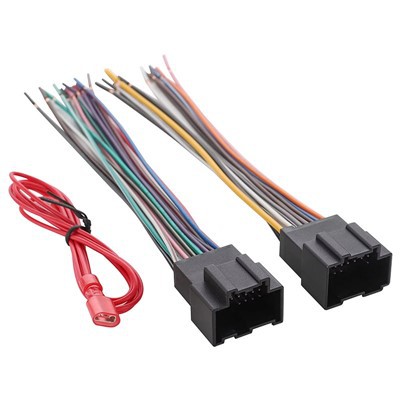
Hey there! I'm an OBD Y Splitter Cable supplier, and today I wanna chat about how the design of an OBD Y Splitter Cable affects its usability.
First off, let's get a basic understanding of what an OBD Y Splitter Cable is. An OBD Y Splitter Cable is a pretty nifty tool. It allows you to connect multiple devices to your vehicle's onboard diagnostic (OBD) port at the same time. This is super useful if you want to run different diagnostic tools or monitoring systems simultaneously without having to constantly swap cables.
Physical Design Considerations
Cable Length
One of the most obvious design aspects is the cable length. A longer cable gives you more flexibility in terms of where you can place your diagnostic or monitoring devices. For example, if you're using a large tablet for diagnostic purposes, you might want to place it on the passenger seat or even on the dashboard. A long cable allows you to position the device comfortably without any tension on the connection to the OBD port.
On the other hand, a shorter cable can be handy if you're short on space or if you mainly use small, handheld devices. A shorter cable reduces the risk of the cable getting in the way or getting tangled up. It can also make the installation a bit neater.
Connector Quality
The connectors on an OBD Y Splitter Cable are crucial. A high - quality connector ensures a secure and reliable connection to the OBD port and the other devices you're attaching. Poorly designed connectors may not fit properly, leading to intermittent connections. This can cause problems with data transfer, as the devices may lose contact with the OBD system, resulting in inaccurate readings or even complete failure of the diagnostic process.
In addition, the material of the connectors matters. Connectors made from durable materials like high - grade plastic and corrosion - resistant metals are less likely to wear out over time. This is especially important if you're using the cable in a harsh environment, such as a mechanic's workshop where there may be exposure to grease, oil, and other contaminants.
Cable Thickness
The thickness of the cable also plays a role in usability. A thicker cable is generally more durable and less likely to break or get damaged. It can also better withstand bending and twisting, which is common when you're installing or moving the devices connected to the OBD Y Splitter Cable. However, a very thick cable can be a bit stiff and difficult to manage, especially if you need to route it through tight spaces.
Electrical Design Considerations
Signal Integrity
The electrical design of the OBD Y Splitter Cable is all about maintaining signal integrity. When you split the OBD connection, you need to ensure that the signals from the OBD port are accurately transmitted to all the connected devices. A well - designed cable will have proper shielding to prevent electromagnetic interference (EMI). EMI can cause signal distortion, which can lead to incorrect diagnostic data.
For example, if you're using a diagnostic tool to check for engine trouble codes, a distorted signal could cause the tool to misinterpret the codes or not read them at all. This can waste a lot of time and lead to incorrect diagnoses.
Power Distribution
Another important electrical aspect is power distribution. Some OBD devices draw power from the OBD port. A good OBD Y Splitter Cable design should be able to handle the power requirements of all the connected devices without overloading or causing power issues. If the power distribution is not properly designed, some devices may not function correctly, or worse, it could even damage the devices or the vehicle's OBD system.
Compatibility Design
Device Compatibility
The design of the OBD Y Splitter Cable should take into account the compatibility with different types of devices. There are a wide variety of OBD diagnostic tools, monitors, and other accessories on the market, and they may have different requirements in terms of connection, data transfer, and power.
A well - designed cable will be compatible with as many devices as possible. This means having the right types of connectors and being able to support different communication protocols used by various devices. For example, some devices may use the CAN protocol, while others may use K - line or ISO9141. A good OBD Y Splitter Cable should be able to handle all these different protocols seamlessly.
Vehicle Compatibility
Just as important is the compatibility with different vehicles. Modern cars have different OBD systems, and the design of the cable should be able to work with a wide range of vehicle makes and models. This includes ensuring that the connector fits the OBD port of different vehicles and that the cable can communicate with the vehicle's OBD system correctly.
Usability in Real - World Scenarios
Mechanics' Workshops
In a mechanics' workshop, an OBD Y Splitter Cable with good design is a must - have. Mechanics often need to use multiple diagnostic tools at the same time to quickly and accurately diagnose vehicle problems. A cable with a long length and high - quality connectors allows them to connect various tools, such as a scan tool, a multimeter, and a data logger, without any hassle.
The ability to handle different communication protocols is also crucial, as mechanics may work on a variety of vehicles with different OBD systems. A well - designed cable can save a lot of time and effort in the diagnostic process, which ultimately leads to more efficient repairs and happier customers.
DIY Enthusiasts
For DIY enthusiasts, usability is also key. They may not have the same level of technical knowledge as professional mechanics, so a cable that is easy to install and use is highly desirable. A cable with clear markings on the connectors and a user - friendly design can make the whole process of connecting diagnostic devices to the vehicle much less intimidating.
In addition, a cable that is compatible with a wide range of devices allows DIYers to use the tools they already have or plan to purchase in the future. This gives them more flexibility in their vehicle maintenance and troubleshooting activities.
Conclusion
In conclusion, the design of an OBD Y Splitter Cable has a huge impact on its usability. From the physical aspects like cable length, connector quality, and cable thickness to the electrical aspects of signal integrity and power distribution, every design element matters. Compatibility with different devices and vehicles is also crucial for a cable to be truly useful in real - world scenarios.


If you're in the market for an OBD Y Splitter Cable, or if you're a business looking to source high - quality cables for your customers, we're here to help. Our OBD Y Splitter Cables, Diagnostic Port Splitters, and OBD2 Splitter Advance Auto Parts are designed with all these usability factors in mind. So, don't hesitate to reach out to us for a purchase discussion. We're confident that our products will meet your needs and exceed your expectations.
References
- Handbook of Automotive Electronics and Control Systems
- Automotive Diagnostics: Principles and Practices
That's all for today's blog. Thanks for reading!