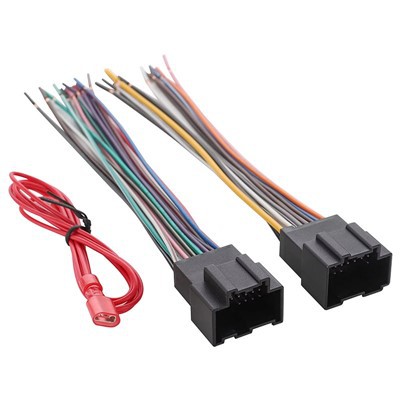
Hey there! As a supplier of truck wiring harnesses, I'm super stoked to share with you all the ins and outs of what makes up these crucial components. So, let's dive right in and explore the different parts that make a truck wiring harness tick.
Wires
At the heart of any truck wiring harness are the wires. These are like the highways of the electrical system, carrying power and signals to different parts of the truck. Wires come in various sizes and colors, each with its own specific purpose. For example, larger wires are used to carry high currents, like those needed for the starter motor or the headlights. Smaller wires, on the other hand, are used for things like sensors and switches.
The type of wire used in a truck wiring harness is also important. Most harnesses use copper wires because they are excellent conductors of electricity. Copper wires are also flexible, which makes them easy to route through the tight spaces in a truck. Some wiring harnesses may also use aluminum wires, which are lighter and more cost-effective, but they are not as good conductors as copper.
Connectors
Connectors are the points where the wires in a truck wiring harness come together. They are like the bridges that allow the electrical signals to flow from one wire to another. Connectors come in different shapes and sizes, depending on the application. Some connectors are designed to be waterproof, which is important for areas of the truck that are exposed to moisture, like the engine compartment or the undercarriage.
There are several types of connectors used in truck wiring harnesses, including pin and socket connectors, blade connectors, and terminal blocks. Pin and socket connectors are the most common type of connector used in automotive applications. They are easy to install and provide a secure connection. Blade connectors are often used for low-current applications, like those found in the interior of the truck. Terminal blocks are used to connect multiple wires together in a single location.
Fuses and Relays
Fuses and relays are important safety components in a truck wiring harness. Fuses are designed to protect the electrical system from overloading. If too much current flows through a circuit, the fuse will blow, cutting off the power and preventing damage to the wiring and other components. Relays, on the other hand, are used to control the flow of electricity in a circuit. They act as switches, allowing the electrical system to turn on and off different components, like the headlights or the horn.
Fuses come in different ratings, depending on the amount of current they can handle. It's important to use the correct fuse rating for each circuit to ensure the safety of the electrical system. Relays also come in different types and ratings, depending on the application. Some relays are designed to handle high currents, while others are used for low-current applications.
Loom and Tape
Loom and tape are used to protect the wires in a truck wiring harness. Loom is a flexible tube that is used to bundle the wires together and protect them from damage. It also helps to keep the wires organized and makes them easier to install. Tape is used to secure the wires to the loom and to provide additional protection.
There are several types of loom and tape available, including nylon loom, spiral loom, and electrical tape. Nylon loom is a popular choice because it is durable and flexible. Spiral loom is also a good option because it allows the wires to move freely and is easy to install. Electrical tape is used to secure the wires to the loom and to provide additional insulation.
Sensors and Switches
Sensors and switches are important components in a truck wiring harness. Sensors are used to detect changes in the environment, like temperature, pressure, or speed. They send signals to the truck's computer, which then uses this information to control different components, like the engine or the transmission. Switches are used to turn on and off different components, like the headlights or the wipers.
There are several types of sensors and switches used in truck wiring harnesses, including temperature sensors, pressure sensors, speed sensors, and limit switches. Temperature sensors are used to monitor the temperature of the engine and other components. Pressure sensors are used to monitor the pressure in the fuel system and the hydraulic system. Speed sensors are used to monitor the speed of the truck. Limit switches are used to detect when a component has reached its maximum or minimum position.
Examples of Our Products
We offer a wide range of truck wiring harnesses to meet the needs of different customers. Here are some examples of our products:
- 20892199 Engine Wire Harness: This wiring harness is designed for use in engines and provides a reliable connection for all the electrical components.
- Wire Harness 15107205: This wiring harness is used in various parts of the truck, including the interior and the exterior. It is made of high-quality materials and provides a secure connection.
- Wire Harness 20586978: This wiring harness is designed for use in heavy-duty trucks and provides a high level of performance and reliability.
Conclusion
So, there you have it! The components of a truck wiring harness are essential for the proper functioning of a truck's electrical system. From the wires and connectors to the fuses and relays, each component plays a crucial role in ensuring the safety and reliability of the truck. If you're in the market for a truck wiring harness, we'd love to hear from you. Our team of experts can help you find the right harness for your needs and provide you with the support and service you deserve.


References
- Automotive Wiring Harness Design and Manufacturing Handbook
- Electrical Systems for Trucks and Buses