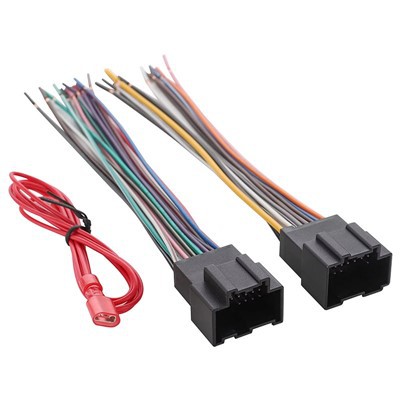
As a seasoned car wire harness supplier, I've witnessed firsthand the significant impact of high temperatures on these critical automotive components. Car wire harnesses are the nervous system of a vehicle, responsible for transmitting electrical signals and power to various parts of the car. Understanding the effects of high temperature on them is crucial for both automotive manufacturers and end - users.
1. Material Degradation
The insulation materials used in car wire harnesses are typically made of polymers such as polyvinyl chloride (PVC), cross - linked polyethylene (XLPE), or ethylene propylene rubber (EPR). High temperatures can cause these materials to degrade over time.


When exposed to elevated temperatures, PVC insulation may start to become brittle. The heat breaks down the molecular bonds in the PVC, reducing its flexibility. As a result, the insulation is more likely to crack, especially when the wire harness is bent or vibrated during normal vehicle operation. Cracks in the insulation expose the underlying conductors, increasing the risk of short - circuits. For example, in a hot climate like the deserts of Arizona, where summer temperatures can soar above 40°C (104°F), car wire harnesses with PVC insulation are at a much higher risk of this type of degradation.
XLPE and EPR are generally more heat - resistant than PVC, but they are not immune to high - temperature effects. Prolonged exposure to high heat can still cause a reduction in their mechanical properties. The cross - linking in XLPE can be affected, leading to a loss of its enhanced strength and durability. In the case of EPR, high temperatures can cause the rubber to harden, which may also result in cracking and insulation failure.
2. Increased Resistance in Conductors
Metallic conductors, such as copper and aluminum, are used in car wire harnesses to carry electrical current. According to the principles of electrical conductivity, the resistance of a conductor is directly proportional to its temperature. As the temperature rises, the atoms in the conductor vibrate more vigorously. These increased vibrations impede the flow of electrons, causing an increase in resistance.
An increase in resistance has several negative consequences. First, it leads to power loss in the form of heat. The additional heat generated due to the increased resistance further exacerbates the temperature problem in the wire harness. Second, it can affect the performance of electrical components in the vehicle. For instance, if the wire harness supplying power to the engine control unit (ECU) experiences an increase in resistance, the ECU may not receive the correct voltage, leading to improper engine management, reduced fuel efficiency, and even engine misfires.
3. Melting of Solder Joints
Solder joints are used to connect different wires and components within a car wire harness. These joints are designed to have a certain melting point. High temperatures can approach or exceed this melting point, causing the solder to soften or even melt.
When solder joints melt, the electrical connection between the wires or components can be disrupted. This can lead to intermittent or complete loss of electrical signals. For example, in a wire harness that connects the sensors in the engine compartment, a melted solder joint can cause inaccurate sensor readings, which in turn can lead to incorrect engine operation. In extreme cases, a melted solder joint can cause a short - circuit, potentially damaging other electrical components in the vehicle.
4. Impact on Connector Performance
Connectors are an integral part of car wire harnesses, providing a means to connect different sections of the harness and to interface with various electrical components. High temperatures can have a significant impact on connector performance.
The plastic housing of connectors can deform under high heat. This deformation can cause the connector to lose its proper fit, leading to loose connections. A loose connection can result in increased resistance at the connection point, similar to the effect of increased resistance in conductors. Additionally, the metal contacts within the connectors can corrode more rapidly at high temperatures. Corrosion on the contacts can further increase resistance and disrupt the flow of electrical current.
5. Fire Hazard
One of the most serious consequences of high - temperature effects on car wire harnesses is the increased fire hazard. When insulation degrades, conductors overheat due to increased resistance, and solder joints melt, the risk of a short - circuit is significantly elevated. A short - circuit can generate a large amount of heat in a very short period, which can ignite the surrounding materials, including the wire harness insulation and other flammable components in the vehicle.
In a vehicle, the engine compartment is particularly vulnerable to this risk. The high - temperature environment in the engine compartment, combined with the presence of fuel vapors, makes it a prime location for a fire to start if there are issues with the wire harness.
Mitigation Strategies
As a car wire harness supplier, we are constantly working on developing solutions to mitigate the effects of high temperatures. We use advanced insulation materials with higher heat - resistance ratings. For example, we offer wire harnesses with fluoropolymer insulation, which has excellent heat resistance and chemical stability.
We also pay close attention to the design of the wire harness. By ensuring proper spacing between wires and components, we can improve heat dissipation. Additionally, we use heat - shrink tubing and other protective coverings to provide an extra layer of insulation and protection against high temperatures.
Product Examples
We offer a wide range of car wire harness products that are designed to withstand high - temperature environments. For example, our Steering Wheel Control Harness is engineered with high - quality insulation materials to ensure reliable performance even in hot conditions. The TR6060 Or T56 58X DBW wire harness is another product that is built to handle the rigors of high - temperature engine compartments. And our Car Battery Harness is designed to provide a stable electrical connection, even when exposed to the heat generated by the battery.
Conclusion
The effects of high temperature on car wire harnesses are far - reaching and can have a significant impact on vehicle performance and safety. As a car wire harness supplier, we understand the importance of providing high - quality, heat - resistant wire harnesses. If you are an automotive manufacturer or in need of car wire harnesses for your vehicle, we invite you to contact us for a detailed discussion on your specific requirements. We are committed to providing the best solutions to meet your needs and ensure the reliable operation of your vehicles in all temperature conditions.
References
- "Automotive Electrical Systems" by Thomas G. Wilson
- "Handbook of Polymer Science and Technology" edited by Herman F. Mark
- "Electrical Engineering Principles and Applications" by Allan R. Hambley