


As a seasoned wiring harness supplier, I've witnessed firsthand the diverse range of connectors used in wiring harnesses. These connectors play a crucial role in ensuring the efficient and reliable transmission of electrical signals and power within various applications. In this blog post, I'll explore the different types of connectors commonly used in wiring harnesses, shedding light on their features, applications, and benefits.
1. Terminal Block Connectors
Terminal block connectors are one of the most basic and widely used types of connectors in wiring harnesses. They consist of a block with multiple terminals, each designed to hold a wire securely. Terminal blocks are typically made of plastic or metal and are available in various configurations, including single-level, multi-level, and feed-through designs.
One of the key advantages of terminal block connectors is their simplicity and ease of use. They allow for quick and easy installation and removal of wires, making them ideal for applications where frequent maintenance or modifications are required. Terminal blocks are commonly used in industrial control panels, electrical cabinets, and power distribution systems.
2. Circular Connectors
Circular connectors are another popular type of connector used in wiring harnesses. They are characterized by their circular shape and are designed to provide a secure and reliable connection in harsh environments. Circular connectors are available in a wide range of sizes, styles, and configurations, making them suitable for a variety of applications, including automotive, aerospace, and industrial.
One of the main advantages of circular connectors is their high level of protection against dust, water, and other environmental factors. They are often sealed to prevent the ingress of moisture and contaminants, ensuring the long-term reliability of the connection. Circular connectors are also known for their high current-carrying capacity and excellent electrical performance.
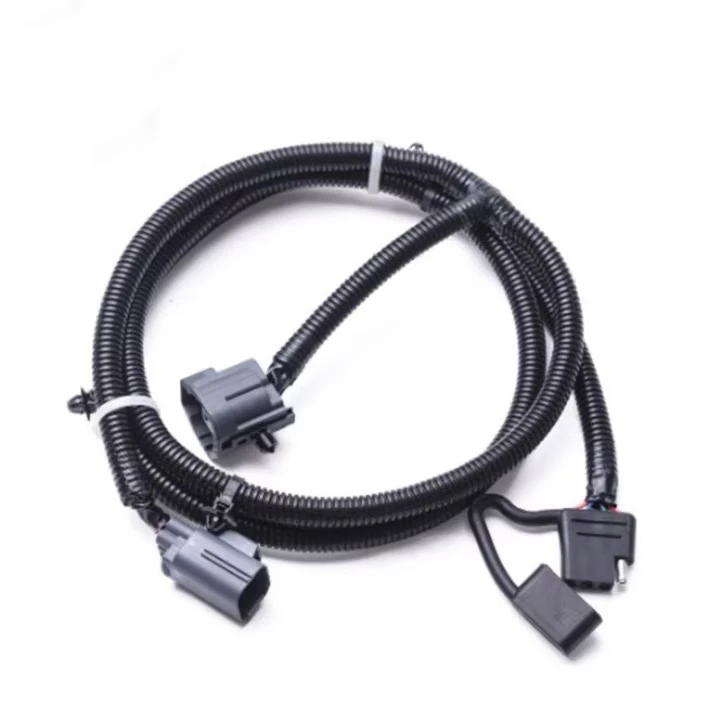

3. Rectangular Connectors
Rectangular connectors are similar to circular connectors but have a rectangular shape. They are commonly used in applications where space is limited or where a high-density connection is required. Rectangular connectors are available in a variety of sizes and configurations, including single-row, multi-row, and right-angle designs.
One of the key advantages of rectangular connectors is their compact size and high density. They allow for a large number of connections to be made in a small space, making them ideal for applications such as computer motherboards, telecommunications equipment, and industrial control systems. Rectangular connectors are also known for their excellent electrical performance and reliability.
4. PCB Connectors
PCB connectors are specifically designed for use on printed circuit boards (PCBs). They are used to connect various components on the PCB, such as integrated circuits, resistors, and capacitors. PCB connectors are available in a wide range of styles and configurations, including through-hole, surface-mount, and edge connectors.
One of the main advantages of PCB connectors is their high level of precision and reliability. They are designed to provide a secure and stable connection between the PCB and the components, ensuring the proper functioning of the electronic device. PCB connectors are also known for their ease of installation and compatibility with automated assembly processes.
5. Coaxial Connectors
Coaxial connectors are used to transmit high-frequency signals, such as those used in telecommunications, radio, and television. They consist of a central conductor surrounded by a dielectric material and a metallic shield. Coaxial connectors are available in a variety of sizes and configurations, including BNC, SMA, and F connectors.
One of the key advantages of coaxial connectors is their ability to transmit high-frequency signals with minimal loss. They are designed to provide a low impedance path for the signal, ensuring the efficient transfer of energy. Coaxial connectors are also known for their high level of shielding, which helps to prevent interference from external sources.
6. Fiber Optic Connectors
Fiber optic connectors are used to connect optical fibers, which are used to transmit data at high speeds over long distances. They are designed to provide a secure and reliable connection between the optical fibers, ensuring the efficient transfer of light signals. Fiber optic connectors are available in a variety of styles and configurations, including SC, LC, and ST connectors.
One of the main advantages of fiber optic connectors is their high bandwidth and low signal loss. They are capable of transmitting data at speeds of up to several gigabits per second, making them ideal for applications such as telecommunications, data centers, and high-speed internet. Fiber optic connectors are also known for their immunity to electromagnetic interference, which helps to ensure the reliability of the connection.
Applications and Considerations
The choice of connector for a wiring harness depends on several factors, including the application, the environment, the electrical requirements, and the cost. Here are some considerations to keep in mind when selecting a connector:
- Application: The type of application will determine the specific requirements of the connector. For example, automotive applications may require connectors that are resistant to vibration, heat, and moisture, while industrial applications may require connectors that are capable of withstanding high voltages and currents.
- Environment: The environment in which the wiring harness will be used is also an important consideration. Connectors used in harsh environments, such as outdoor or industrial settings, may need to be sealed to prevent the ingress of dust, water, and other contaminants.
- Electrical Requirements: The electrical requirements of the application, such as the voltage, current, and signal frequency, will also determine the type of connector that is required. For example, high-frequency applications may require connectors with low impedance and high bandwidth.
- Cost: The cost of the connector is also an important consideration. While high-quality connectors may be more expensive, they may also provide better performance and reliability in the long run.
Our Offerings
As a wiring harness supplier, we offer a wide range of connectors to meet the diverse needs of our customers. Our product portfolio includes terminal block connectors, circular connectors, rectangular connectors, PCB connectors, coaxial connectors, and fiber optic connectors. We also offer custom wiring harness solutions to meet the specific requirements of our customers.
If you're looking for a reliable and high-quality wiring harness supplier, we invite you to explore our product offerings. We offer a 16 Foot Trailer Wiring Harness 16 Foot Trailer Wiring Harness that is designed to provide a secure and reliable connection for your trailer. We also offer a Jeep Jl Trailer Wiring Harness Jeep Jl Trailer Wiring Harness that is specifically designed for Jeep JL models. In addition, we offer a Jeep 4.0 Stand Alone Harness Jeep 4.0 Stand Alone Harness that is ideal for engine swap applications.
If you have any questions or would like to discuss your wiring harness requirements, please don't hesitate to contact us. We look forward to working with you to provide the best wiring harness solutions for your needs.
References
- "Connectors for Wiring Harnesses," Electronics Notes.
- "Types of Electrical Connectors," Electrical4U.
- "Wiring Harness Design and Manufacturing," IPC.