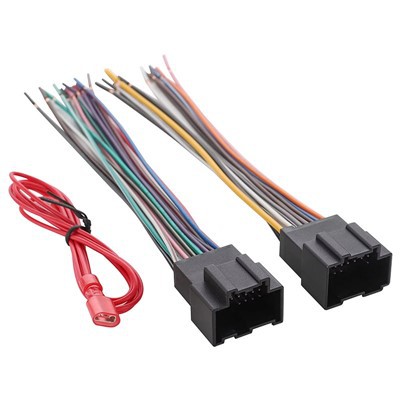
Hey there! As a supplier of trailer wiring harnesses, I've seen firsthand how important converters are in these setups. So, let's dive into what the role of a converter is in a trailer wiring harness.
First off, let's understand what a trailer wiring harness is. It's a system of wires that connects your towing vehicle to the trailer. This connection allows for the transfer of electrical signals from the vehicle to the trailer, enabling functions like brake lights, turn signals, and running lights to work properly. But here's the thing - not all vehicles and trailers use the same wiring configurations. That's where the converter comes in.
What Exactly is a Converter?
A converter is a device that helps bridge the gap between the electrical system of the towing vehicle and the trailer. It takes the electrical signals from the vehicle and transforms them into a format that the trailer can understand. Think of it as a translator between two different languages.
There are different types of converters, and the type you need depends on the specific wiring requirements of your vehicle and trailer. For example, some vehicles have a combined brake and turn signal circuit, while trailers typically have separate circuits for brakes and turns. A converter can split the combined signal from the vehicle into two separate signals for the trailer, ensuring that the brake lights and turn signals work as they should.
The Importance of Converters in Trailer Wiring
- Safety First
- One of the primary roles of a converter is to enhance safety on the road. By ensuring that the trailer's lights are working correctly, other drivers can easily see when you're braking or turning. This reduces the risk of accidents, especially when towing a large trailer. For instance, if the brake lights on the trailer don't function properly, the driver behind you may not know when you're slowing down, which could lead to a rear - end collision.
- Compatibility
- Different vehicles and trailers have different wiring standards. A converter helps make sure that your trailer is compatible with your vehicle. For example, if you have a Wiring Trailer Lights 5 Wire, the converter can adjust the electrical signals from your vehicle to match the requirements of the 5 - wire setup.
- Functionality
- Without a converter, some of the trailer's functions may not work correctly. For example, if the turn signals on the trailer are not properly connected or if the brake lights are not synchronized with the vehicle's brakes, it can be a real headache. A converter ensures that all the electrical functions of the trailer, from the running lights to the backup lights, work smoothly.
How Converters Work
Converters come in different forms, but most work by using relays or diodes. Relays are like switches that can control the flow of electricity. When an electrical signal from the vehicle reaches the converter, the relay can activate the appropriate circuit on the trailer. Diodes, on the other hand, allow electricity to flow in only one direction. They can be used to separate combined signals into individual signals.
Let's say your vehicle has a combined brake and turn signal circuit. When you apply the brakes, the converter uses a relay to send the brake signal to the trailer's brake lights. When you use the turn signal, the converter uses diodes to separate the turn signal from the brake signal and send it to the appropriate side of the trailer.
Types of Converters
- Basic Converters
- These are the simplest type of converters. They are usually used for basic trailer setups with a few lights. They can split combined signals into separate signals for brakes and turns. Basic converters are relatively inexpensive and easy to install.
- Advanced Converters
- Advanced converters are more complex and can handle more functions. They may be able to control additional features like electric brakes on the trailer. These converters are often used for larger trailers or trailers with more sophisticated electrical systems. For example, if you have an Etrailer Wiring Harness, an advanced converter may be required to ensure all the functions work properly.
- Custom Converters
- In some cases, you may need a custom converter to fit your specific vehicle and trailer combination. This is especially true if you have a unique wiring setup or if you're using non - standard equipment. Custom converters can be more expensive, but they offer the best fit and functionality for your particular situation.
Installation of Converters
Installing a converter is not always a walk in the park, but it's definitely doable for those with some basic electrical knowledge. Here are the general steps:
- Identify the Wiring
- First, you need to identify the wiring on your vehicle and trailer. This involves finding the power source, ground wires, and the wires for the different lights and functions.
- Mount the Converter
- The converter needs to be mounted in a secure location, preferably away from moisture and heat. You can use brackets or adhesive to mount it.
- Connect the Wires
- Connect the wires from the vehicle to the appropriate inputs on the converter. Then, connect the output wires from the converter to the trailer's wiring harness. Make sure all the connections are tight and secure.
- Test the System
- Once everything is connected, test the trailer lights to make sure they're working properly. Check the brake lights, turn signals, and running lights. If there are any issues, double - check your connections.
Troubleshooting Converters
Sometimes, things don't go as planned, and you may encounter problems with your converter. Here are some common issues and how to fix them:
- Lights Not Working
- If the lights on the trailer are not working, first check the connections. Make sure all the wires are properly connected and that there are no loose or corroded connections. You may also want to check the fuse on the converter or in the vehicle's electrical system.
- Incorrect Signals
- If the brake lights or turn signals are not working correctly, it could be a problem with the converter. Check the wiring to make sure the signals are being split correctly. You may need to adjust the settings on the converter or replace it if it's faulty.
- Overheating
- If the converter is overheating, it could be due to a short circuit or an overloaded circuit. Check the wiring for any signs of damage and make sure the converter is rated for the electrical load of your trailer.
Why Choose Our Trailer Wiring Harnesses and Converters
As a supplier of trailer wiring harnesses, we offer high - quality products that are designed to work seamlessly with converters. Our wiring harnesses are made from durable materials and are tested to ensure reliability. Whether you need a 02 F250 Trailer Wiring or a wiring harness for a different vehicle, we've got you covered.
Our converters are also top - notch. They are designed to handle different wiring configurations and provide a stable electrical connection between your vehicle and trailer. We offer a range of converters, from basic to advanced, to meet your specific needs.
If you're in the market for a trailer wiring harness or a converter, we'd love to talk to you. We can help you choose the right products for your vehicle and trailer and provide you with installation tips and support. Don't hesitate to reach out to us for a quote or to discuss your requirements. We're here to make your towing experience safe and hassle - free.


References
- Trailer Wiring Manuals from various manufacturers
- Electrical Engineering textbooks on automotive wiring systems
So, that's all about the role of a converter in a trailer wiring harness. I hope this blog has been helpful to you. If you have any questions or need more information, feel free to get in touch. We're always happy to assist you with your trailer wiring needs.