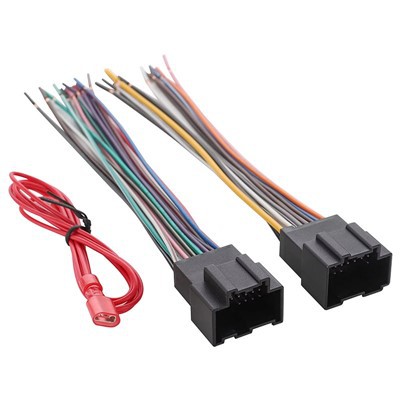
Hey there! As a supplier of OBD Splitter Adapters, I often get asked about the data transfer rate of these nifty little devices. So, let's dig into it and break down what you need to know.
First off, let's understand what an OBD Splitter Adapter is. An OBD (On - Board Diagnostic) Splitter Adapter, like the ones you can check out here, allows you to connect multiple devices to your vehicle's OBD II port simultaneously. It's super useful if you want to use a diagnostic tool and a GPS tracker at the same time, for example. There are also OBD II Port Splitters and OBD2 Y Cables which serve similar purposes but might have different configurations.
Now, onto the data transfer rate. The data transfer rate of an OBD Splitter Adapter is mainly determined by a few factors. The first and most important one is the communication protocol used by the vehicle's OBD system. There are several common protocols, such as ISO 9141 - 2, KWP2000 (Keyword Protocol 2000), CAN (Controller Area Network), and J1850.
CAN is by far the most widely used protocol these days, especially in newer vehicles. It offers a relatively high data transfer rate. In a standard CAN network, the data transfer rate can range from 10 kbps (kilobits per second) to 1 Mbps (megabits per second). Most modern vehicles using CAN operate at 500 kbps or 250 kbps. This high rate means that data can be transferred quickly between the OBD system and the connected devices. For example, if you're using a diagnostic device to read real - time engine data, a higher data transfer rate ensures that you get the information almost instantly.
On the other hand, older protocols like ISO 9141 - 2 and KWP2000 have much lower data transfer rates. ISO 9141 - 2 typically operates at around 10.4 kbps, while KWP2000 can go up to 10.4 kbps in slow mode and 115.2 kbps in fast mode. This slower rate can sometimes lead to a bit of a delay when retrieving data, especially if you're trying to access a large amount of information.
The OBD Splitter Adapter itself doesn't really change the underlying data transfer rate set by the vehicle's protocol. Its main function is to split the connection so that multiple devices can access the data stream. However, a well - designed adapter should be able to handle the data flow without any significant loss or interference.


When choosing an OBD Splitter Adapter, it's important to consider the data transfer requirements of the devices you want to connect. If you're using high - end diagnostic tools that need to access a large amount of data quickly, you'll want to make sure that the adapter is compatible with a high - speed protocol like CAN.
Another thing to keep in mind is the quality of the adapter. A cheaply made adapter might have issues with signal integrity, which can affect the data transfer rate. For example, if the wires inside the adapter are of low quality, they might introduce noise into the data signal, causing errors and reducing the effective data transfer rate.
Let's talk about some real - world scenarios. Suppose you have a GPS tracker and a diagnostic scanner connected to your vehicle's OBD port using an OBD Splitter Adapter. The GPS tracker might not need a very high data transfer rate. It just needs to periodically send location data to a server. On the other hand, the diagnostic scanner could be constantly monitoring various engine parameters, such as RPM, coolant temperature, and fuel pressure. In this case, a high - speed data transfer rate is crucial to ensure that the scanner can get accurate and up - to - date information.
If you're in the market for an OBD Splitter Adapter, you should also look at the specifications provided by the manufacturer. They usually mention the supported protocols and the maximum data transfer rate that the adapter can handle. This information will help you make an informed decision based on your specific needs.
In addition to the protocol and the adapter quality, the number of devices connected to the splitter can also have an impact on the data transfer. Each device connected to the OBD port will consume a certain amount of the available data bandwidth. If you connect too many devices, it could potentially slow down the data transfer for all of them. So, it's a good idea to limit the number of connected devices based on the data requirements of each one.
To sum it all up, the data transfer rate of an OBD Splitter Adapter is mainly dictated by the vehicle's OBD protocol. CAN offers high - speed data transfer, while older protocols are slower. The quality of the adapter and the number of connected devices also play important roles in ensuring smooth data flow.
If you're interested in purchasing high - quality OBD Splitter Adapters, feel free to reach out to us for more information and to discuss your specific needs. We're here to help you find the best solution for your vehicle diagnostic and monitoring requirements.
References:
- Automotive Diagnostic Systems Handbook
- OBD II Protocol Standards Documentation